


How Do You Avoid Online Clothing Returns?
Last Updated: November 12, 2026
Quick Summary
The best way to avoid online clothing returns is to measure your body, check each brand's size chart, and read fabric composition before you buy. Reading customer reviews for fit details and building a small capsule wardrobe also cut down on returns.
- Take bust, waist, hips and inseam with a soft tape, and compare them to each store's size guide.
- A small amount of elastane usually means a garment will stretch to fit.
- Read reviews from buyers with a similar height and usual size, and check how they say the item fits.
- Check the return window, whether returns are free, and any restocking fees before you order.
- Build a capsule wardrobe, and only buy items you can style in at least three outfits.
Table of Contents
- Why Online Clothing Gets Returned So Often
- How to Measure Your Body for Clothing Size
- Understanding Fabric Composition for Clothing
- How to Read Customer Reviews for Sizing
- Checking Product Photos, Videos and Return Policies Before You Buy
- Building a Capsule Wardrobe to Reduce Impulse Returns
- Your Next Step: Shopping Smarter at Kista Kollection
- Frequently Asked Questions
Why Online Clothing Gets Returned So Often
Most online clothing returns happen for one reason: the item did not fit, and the buyer could not tell before ordering. A shirt can look right in the photo, the size chart can seem fine, and then the package arrives feeling wrong.
Sizing is the main driver. Many shoppers pick a size based on habit rather than measurements, and brands cut their sizes differently. A medium from one store can fit like a small at another.
Returns also come from impulse buys. A bold statement piece looks great on a model but does not match anything already in the closet. The buyer ends up with an item they never wear.
A few common causes stand out:
- Sizes that vary between brands and styles
- Fabrics that stretch, shrink or hang differently than expected
- Photos that hide the true color, texture or fit
- Items bought on a whim without a plan for how to wear them
Knowing these causes is the first step. Once you see where the problem starts, the fixes become clear.
How to Measure Your Body for Clothing Size
Good measurements are the single best way to avoid sizing returns. Most shoppers guess their size, but a few minutes with a tape measure gives you real numbers to compare against each store's size guide.
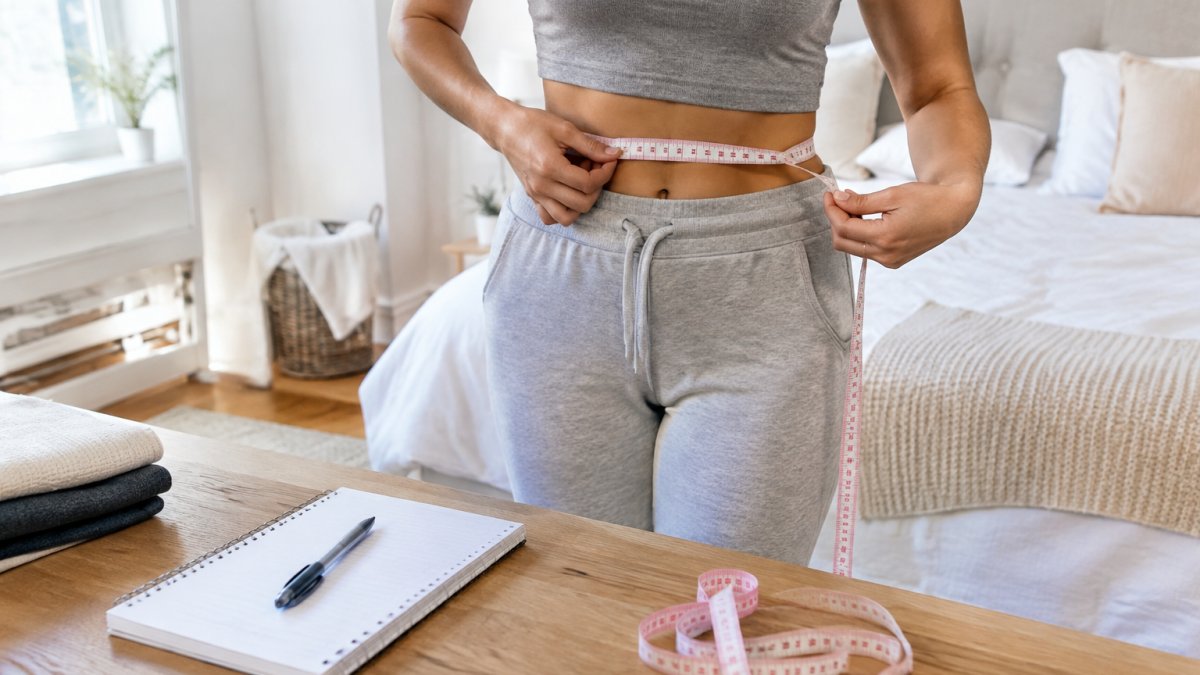
Taking Your Measurements Correctly
Use a soft measuring tape and keep it level all the way around your body. Do not pull it tight. It should rest snugly against your skin without digging in.
Take these measurements:
- Bust: around the fullest part of the chest, with the tape straight across the back
- Waist: around the natural waistline, usually the narrowest part of your torso
- Hips: around the fullest part of the hips and seat
- Inseam: from the crotch down to the ankle, for pants
Stand relaxed and breathe normally. Measuring while holding your breath or sucking in your stomach gives false numbers.
Write each measurement down. Repeat the process once more to check for accuracy.
Using Your Own Measurements Against a Size Chart
Once you have your numbers, compare them to the size guide on the product page. Look for the closest match in each measurement, not just the overall size label.
If your bust and hips fall into different sizes, many shoppers choose the larger size for comfort and adjust with fit notes. Watch for body measurements listed in inches or centimeters, and make sure you compare like with like.
Save your measurements in your phone. This turns every future shopping trip into a faster, more accurate decision.
Understanding Fabric Composition for Clothing
Fabric decides how a garment fits, feels and ages. Two shirts in the same size can fit very differently if one is cotton and the other is a blend. Most shoppers check the size chart and stop there, but the fabric composition is the second half of the fit equation, and it is the part almost no guide explains properly.
Check the fabric composition on every product page before you buy. Common materials include:
- Cotton: breathable and natural, but can shrink after washing and has little natural stretch unless it is knit
- Polyester: holds its shape well and resists wrinkles, but traps heat and can feel stiff against the skin
- Viscose or rayon: soft and drapey, often with more movement, but can stretch out of shape when wet
- Elastane or spandex: adds stretch and recovery for a close fit, usually in small percentages
- Wool: temperature-regulating and resilient, but can felt or shrink if washed wrong
- Linen: breathable and cool, but wrinkles easily and has almost no stretch
A small amount of elastane in a garment usually means it will stretch to fit. A high cotton content with no stretch means the size you choose needs to be right from the start. A 95% cotton / 5% elastane t-shirt will forgive a slightly off size; a 100% cotton woven shirt will not.
Decoding Stretch and Drape
Stretch tells you how much a fabric gives when you move. Drape describes how it falls on the body. Both affect fit more than most shoppers expect, and both can be judged from the product page if you know what to look for.
Stretch comes in two forms. Knit fabrics (t-shirts, jersey dresses, leggings) stretch because of how the yarn is looped, even without elastane. Woven fabrics (denim, button-down shirts, tailored trousers) have little natural stretch unless elastane is added. A woven garment with 2% elastane will move with you; the same garment with 0% will not. If a product page lists a woven fabric with no stretch content and you are between sizes, size up, there is no give to bail you out.
Drape is how a fabric hangs. A fabric with good drape, viscose, rayon, silk, fine jersey, hangs smoothly and skims the body without clinging. A stiff fabric, heavy cotton, canvas, structured wool, stands away from the body and can look bulky on some figures. Drape matters most on dresses, skirts and wide-leg trousers, where the fabric's fall defines the silhouette. A drapey fabric will flatter a range of body types; a stiff fabric is less forgiving and depends more on precise sizing.
Stretch recovery is the third variable. A fabric with good recovery snaps back to its original shape after stretching; a poor one bags out at the knees and elbows. Elastane improves recovery, but high-stretch fabrics with low recovery (some cheap jerseys) can stretch out after a few wears. Look for reviews that mention whether the item held its shape after washing.
Look for product descriptions that mention stretch recovery, drape or weight. If the page gives none of these details, check customer photos or reviews to see how the fabric actually moves. A common pattern is that shoppers who ignore fabric composition end up returning items that fit on paper but feel wrong in person, the size was right, the fabric was not.
Watch out: a fabric that feels right in the fitting room can behave differently after one wash. Cotton shrinks, viscose can stretch, and wool can felt. Check the care instructions before you commit, and if the garment is dry-clean only, factor that into whether you will actually wear it.
The table below sums up how each common fabric behaves, so you can judge fit and feel before you order.
| Fabric | Key trait | Watch out for |
|---|---|---|
| Cotton | Breathable and natural | Can shrink after washing |
| Polyester | Holds its shape | Traps heat, can feel stiff |
| Viscose or rayon | Soft and drapey | Can stretch out when wet |
| Elastane or spandex | Adds stretch and recovery | Usually only in small amounts |
| Wool | Temperature-regulating | Can felt or shrink if washed wrong |
| Linen | Breathable and cool | Wrinkles easily, almost no stretch |
How to Read Customer Reviews for Sizing
Reviews are one of the most useful tools for avoiding returns, but most shoppers read them wrong. They scan the star rating, read the top few comments, and move on. The result is that they miss the specific fit signals that would have told them whether to size up, size down, or skip the item entirely.
Reviews work best when you treat them as a second size chart, one written by people with bodies like yours. Here is how to read them for fit rather than for general sentiment.
What to Look For in a Fit Review
A useful review mentions concrete details. Look for reviews that include:
- Their height, build or usual size, a review that says "I'm 5'4" and usually a small, and this fit true to size" is worth ten that say "love it"
- Whether the item runs small, large or true to size, and by how much ("runs about half a size small")
- How the fabric feels after wearing or washing, did it shrink, stretch out, or pill?
- Problems with length, sleeves or fit through the shoulders, the areas where size charts are least reliable
- Photos from buyers with a similar build, buyer photos show the garment on a real body, not a model
Read the lowest-rated reviews too. They often point out real flaws, such as a fabric that pills quickly or a cut that does not suit petite or tall frames. A one-star review that says "the shoulders were too narrow for my usual medium" is more useful than a five-star review that says "perfect."
Using Reviews to Verify Your Measurements
Use reviews to confirm your measurements, not replace them. The strongest pattern is to find two or three reviewers whose height and usual size match yours, and see what size they bought and how it fit. If three buyers with a similar build say the item runs small, size up. If reviewers with your build say it runs true to size, trust your measurements.
A common pattern is that shoppers who read reviews for fit signals return fewer items than those who read them for general sentiment. The difference is whether you are looking for confirmation that the item is good or for specific data about how it fits.
The Behavioral Trap: Reading Reviews After You've Decided
There is a psychological trap here worth naming. Most shoppers read reviews after they have already decided to buy, which means they read them for reassurance rather than for information. They skim past the fit complaints and latch onto the positive comments. This is confirmation bias, and it is one of the quiet drivers of online clothing returns.
The fix is to read reviews before you decide, with a specific question in mind: "What would make me return this?" If the reviews answer that question, the sleeves run short, the fabric is thinner than expected, the color is off, you can either adjust your size or skip the purchase. If the reviews do not answer it, the item is a gamble.
Watch out: reviews can be gamed. A cluster of five-star reviews posted on the same day, or reviews that mention the brand name repeatedly in generic language, are often incentivized. Weight reviews that include photos, specific measurements, or complaints more heavily than short praise.
Checking Product Photos, Videos and Return Policies Before You Buy
Before adding anything to your cart, spend a minute on the product media and the store's policies. These checks catch many problems early.
Product photos: Look for pictures from several angles, including the back and close-ups of the fabric.
Product videos: Where available, a short video can show how the fabric moves and drapes.
Return policy: Read the return window, whether returns are free, and whether there are restocking fees. Check the store's policy before you order.
Watch out: returns take time, so it is still worth getting the size right first.
Building a Capsule Wardrobe to Reduce Impulse Returns
A capsule wardrobe is a small set of pieces that all work together. It is one of the best ways to stop buying items that never get worn.
Start with a few basics in neutral colors, such as a well-fitting pair of jeans, a plain t-shirt, a knit sweater and a simple jacket. You can find affordable everyday staples that work as these building blocks. These staples match almost everything else you own.
Then add a few accent pieces in colors that go with your basics. Each new item should pass a simple test: can you think of at least three outfits you would wear it with?
Everyday staples make this approach easier.
A capsule wardrobe also cuts impulse returns. When every purchase has a clear role, you are far less likely to send it back because it does not fit your life.
Your Next Step: Shopping Smarter at Kista Kollection
Shopping for clothes online should feel confident, not like a gamble. Kista Kollection helps you build a wardrobe with trend-forward pieces and reliable staples that match your personal style. Browse our collection, check the fabric details, and use the tips above to shop with less guesswork.
Frequently Asked Questions
What percentage of online clothing purchases are returned?
Return rates for online apparel are consistently high, and fit is the most common reason shoppers send items back. Because the figures vary by retailer, category and study, check the source of any percentage you find before relying on it. The practical takeaway is the same either way: most returns come from sizing and fabric surprises, which you can reduce by measuring yourself carefully, reading fabric labels and checking reviews before you order.
What is the 3-3-3 rule for clothes?
The 3-3-3 rule is a simple capsule wardrobe method: pick three colours, three bottoms and three tops, then build outfits from those pieces. Because every item works with the others, you are less likely to buy a statement piece that matches nothing in your closet. For online shoppers, it also narrows the search, so each purchase has a clear role and is easier to keep.
How can I accurately measure myself for online clothing shopping?
Use a soft tape measure, keep it level and snug without compressing the skin, and measure over light underwear. Record bust or chest, waist, hips and inside leg, then compare those numbers with the brand's garment measurement chart rather than its generic size label. Measure twice and write the figures down, because a size chart is only useful when your numbers match the chart's own measurement points.
Does reading customer reviews actually help reduce returns?
Yes, when you read them for specifics. Look for reviewers who state their height, usual size and body type, and who say whether the item ran small, large or true to size. Ignore one-line praise and focus on repeated comments about fit, fabric thickness and stretch. Those details tell you far more about how an item will fit your body than the product description does.
